AI & the biology of ageing October 2026

Can AI help us
repair human
ageing?

Scientists are designing molecules, changing cell states and testing ways to restore damaged tissue. Follow the programmes and the evidence they produce.

Independent science publicationSources checked · 4 Oct 2026
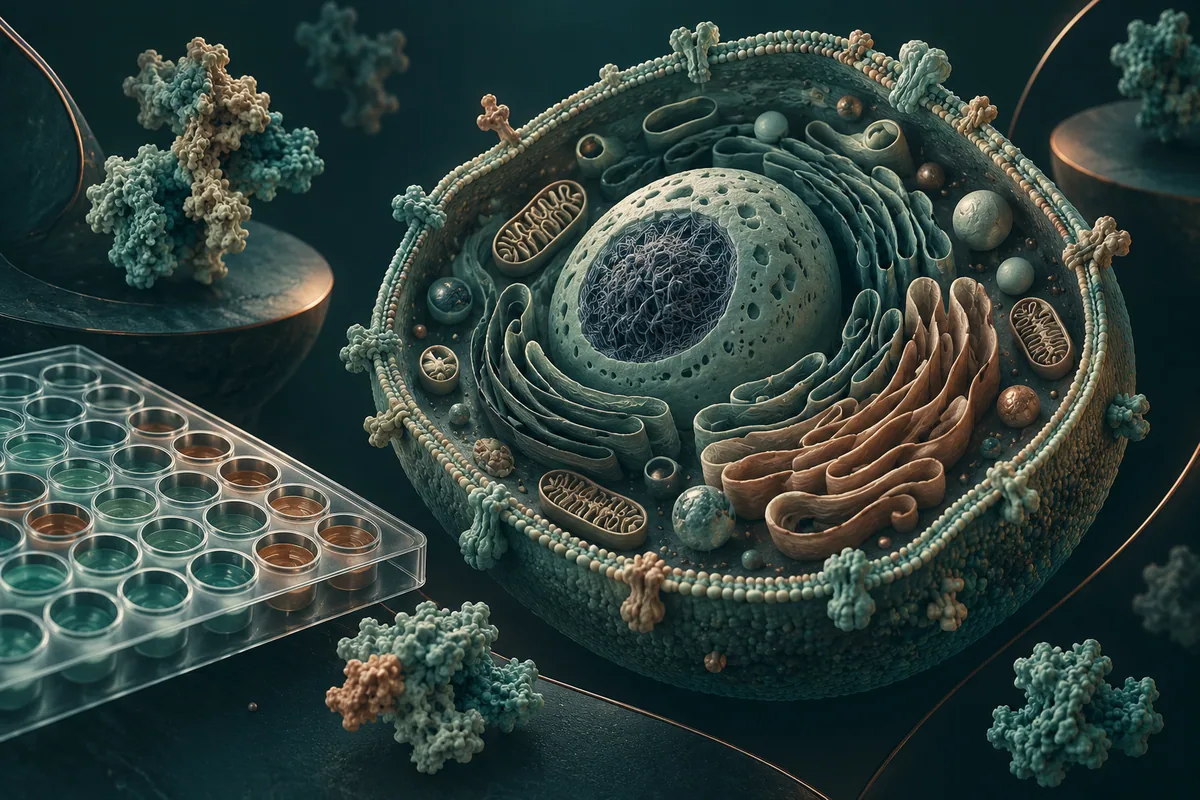
Conceptual cutaway cell beside folded protein forms and a laboratory assay plate.

Discovery can move quickly. Human experiments test whether a treatment does what researchers intended.

14 programmes followed8 scientific explainers7 investigationsHow we follow the evidence

Programmes to follow

Read the mechanism, development history and human evidence.

All programmes
ReprogrammingHuman study

ER-100

Life Biosciences

ER-100 brings controlled cellular reprogramming into a Phase 1 study of optic nerve disease. Life Biosciences has announced an interim presentation for 8 October 2026. As of 4 October, those findings have not been presented in the verified sources.

Cells · Animals · HumansRead dossier
AI discoveryPublished human results

Rentosertib

Insilico Medicine

Rentosertib connects AI-assisted target selection and molecular design with published lung-disease trial results. A September 2026 analysis examined ageing clocks in stored samples. The developer also announced first dosing in a larger Phase 3 study; the medicine remains experimental.

Cells · Animals · HumansRead dossier
SenescencePreclinical research

Senolytic CAR T cells

Academic collaborations at Memorial Sloan Kettering and Cold Spring Harbor Laboratory

Researchers have engineered T cells to recognise uPAR, a surface protein associated with senescence. Mouse studies test whether clearing these cells improves metabolism and intestinal function.

Cells · AnimalsRead dossier
DeliveryPreclinical research

Liver mRNA immune restoration

Broad Institute, MIT and academic collaborators

A mouse study uses liver-directed mRNA to supply immune signals. The research tests a temporary change in immune function.

Research developments

What changed

A first dose, a published result or a programme ending. Each development has a date and a source.

Read the development record

Inside the research

Models of cells, designed proteins and the experiments that test their predictions.

All research and explanations

What did the experiment measure?

A study can measure a change in a molecule, a tissue or a person’s function. Who was studied, what was measured and how the result was obtained determine what it can tell us.

Programme histories keep published findings alongside company disclosures and trial records. Each source is identified so you can check it yourself.

Read the editorial method

Search the publication

Search programme histories and research articles.